Maximizing Property Value Through Strategic Development
When most people hear “maximize property value,” they think about building as much as possible,…

Liberty InvestmentsNovember 19, 2025

How to Determine What You Can Build on Your Property

You own property.
But do you know what it could become?
Maybe it’s a home on a larger-than-typical lot. A small apartment building. An older commercial property. An underused corner lot. A rental you’ve owned for years. A property you inherited. Or simply a place in a neighborhood that looks very different today than when you first bought it.
And lately, you’ve started wondering:
Could we do something more with this property?
That question can open the door to some fascinating possibilities.
Because the property you see today may be very different from the opportunity hidden within it.
Perhaps there’s room for another home.
Or several homes.
Maybe a single-family property could become a duplex, fourplex, townhomes, or another form of housing.
Perhaps an older building could be replaced or repositioned.
Maybe housing could be added while retaining part of what’s already there.
Maybe a commercial property could become mixed-use.
Or perhaps there’s an opportunity you haven’t considered yet.
The challenge is figuring out what is actually possible.
And that answer is rarely as simple as looking up the zoning.
Cities change.
Neighborhoods change.
Zoning changes.
Housing rules change.
Transit arrives.
Density increases.
What made sense for a property 20 years ago may not be what makes sense today, or tomorrow.
That’s one of the things that makes urban development so interesting.
A modest-looking property can sometimes contain surprisingly valuable possibilities.
And two properties on the same street can have very different development potential.
The opportunity may depend on the property itself, what surrounds it, current regulations, access, utilities, existing improvements, market demand, development costs, and many other factors.
That’s why the most interesting question usually isn’t:
“What is this property today?”
It’s:
“What could this property become?”
Before getting into the technical details, consider the possibilities.
Could your property potentially become:
Sometimes the opportunity is relatively simple.
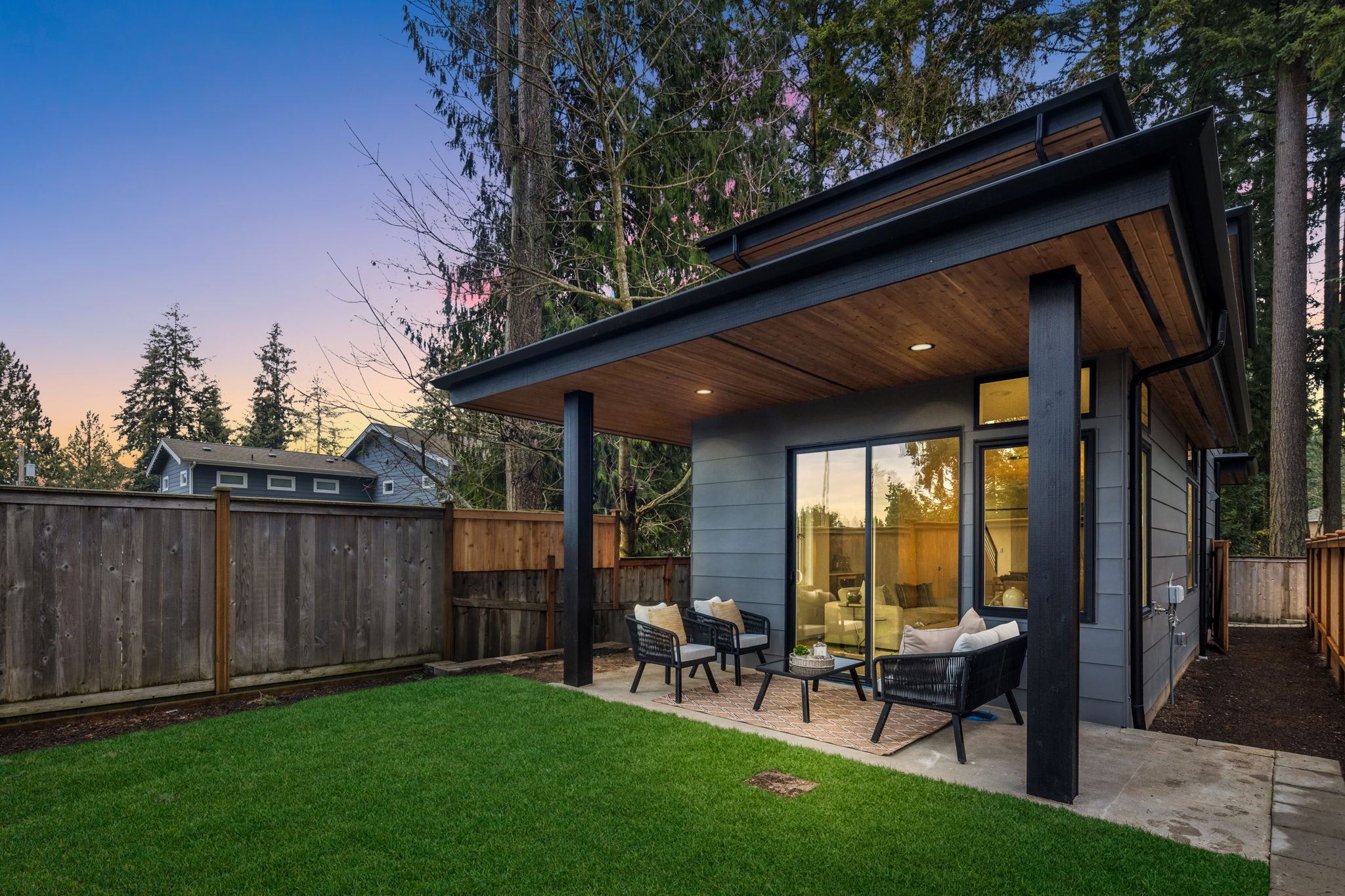
An existing residential property may have the potential for an additional home, accessory dwelling, detached unit, or another housing configuration.
Could one home become several?
Depending on the property and local rules, possibilities might include duplexes, triplexes, fourplexes, apartments, condominiums, or other forms of housing.
A property that appears relatively ordinary today might potentially support several new homes designed for an urban neighborhood.
Development doesn’t always require starting over.
In some situations, there may be opportunities to retain an existing structure while creating additional housing elsewhere on the property.
That can create an entirely different set of possibilities for an owner.
Could residential space be combined with retail, office, or another commercial use?
For the right property, the best opportunity may involve more than one use.
An aging office, retail building, small warehouse, parking area, or other underused property may be sitting on a site whose future value looks very different from its current use.
Sometimes the building isn’t the most interesting part of the property.
The underlying development potential is.
This is often where the conversation gets exciting.
Property owners understandably tend to think about their real estate based on what exists today.
Developers ask different questions.
What else could this be?
What has changed around it?
What might the neighborhood need next?
Could the existing building remain?
Could additional housing be added?
Is there a more creative configuration?
Would combining uses create a better project?
Could a constraint actually point us toward a different opportunity?
Curiosity is often the beginning of development.
Here’s where things become more complicated.
The answer is:
It depends on your specific property.
Development potential can be influenced by zoning, allowable uses, density, setbacks, height, access, utilities, existing structures, environmental conditions, parking requirements, building codes, local development standards, market demand, construction costs, and numerous other considerations.
And these factors interact.
That’s why an online zoning map can only tell you so much.
Seeing that a property is zoned for a particular use doesn’t necessarily tell you what can practically be designed, approved, financed, and built.
Likewise, seeing an apparent limitation doesn’t necessarily tell you that there are no other options worth exploring.
The real question isn’t simply:
“What does my zoning allow?”
It is:
“What can realistically and economically be accomplished with this particular property?”
That’s a much more valuable question.
Another misconception is that the goal of development is always to build the maximum amount physically possible.
Not necessarily.
The best project might be two units instead of four.
Or four instead of six.
It might make sense to retain an existing home.
It might make sense to replace it.
It might be better to obtain approvals and sell the property rather than build.
Or the smartest decision may be to leave the property exactly as it is for now.
The goal isn’t simply to maximize density.
It’s to find the strategy that makes the most sense for the property, owner, neighborhood, market, cost, timing, and risk involved.
Maybe you’ve asked about your property before.
Perhaps someone told you another unit wouldn’t fit.
The zoning wasn’t right.
The existing building made development difficult.
Parking was an issue.
The numbers didn’t work.
Or the process simply seemed too complicated.
That previous conclusion may still be correct.
But cities evolve.
Development regulations change. Housing policies change. Market conditions change. Construction methods change. And sometimes a different concept leads to an entirely different answer.
A professional evaluation doesn’t guarantee that a property can be redeveloped.
It can, however, help you understand the possibilities before you make an important decision.
This can become especially important when someone approaches you about buying your property.
Maybe it’s a developer.
Maybe it’s a neighbor.
Maybe it’s an investor.
And maybe the offer sounds attractive.
It might be.
But there’s another question worth asking:
What does the buyer see that I may not see?
A developer may not be evaluating your property based solely on the home, apartment building, store, or other structure sitting there today.
They may be evaluating what the property could become.
That doesn’t mean you shouldn’t sell.
Sometimes selling is absolutely the right choice.
But there is a meaningful difference between selling after understanding your property’s potential and selling without ever investigating it.
Understanding your options gives you choices.
You probably don’t.
And that’s the point.
Exploring your property’s potential shouldn’t require you to become an expert in zoning, permitting, design, construction, engineering, financing, and development management.
That’s where a developer-for-hire can help.
Liberty Investments works with property owners who want to understand and potentially unlock the development value of their real estate without having to navigate the entire process themselves.
Sometimes the first step is simply helping answer:
Is there an opportunity here worth pursuing?
If there is, the next questions become clearer.
What might the property become?
What would pursuing that opportunity involve?
What could it cost?
What are the risks?
And does it make financial sense?
Only then should an owner decide how far they want to go.
You don’t need architectural drawings.
You don’t need a development plan.
And you don’t need to know exactly what you want to build.
You may simply own a property and have a feeling that there could be more to it than what exists today.
Maybe you’ve noticed new townhomes appearing nearby.
Maybe your neighborhood is becoming denser.
Maybe the property next door was redeveloped.
Maybe you’ve heard about changes to local housing rules.
Maybe you’re considering selling and want to understand what you have first.
Or maybe you’ve simply started wondering:
“What could my property become?”
That’s enough to start a conversation.
At Liberty Investments, we help property owners explore that question.
We work in markets including Puget Sound and Western Washington, Dallas–Fort Worth, Boise, Miami and South Florida, Charleston, Raleigh and the Research Triangle, and Nashville and Middle Tennessee.
Every city is different.
Every neighborhood is different.
And every property has its own set of possibilities and constraints.
Don’t assume.
Don’t rely solely on an online zoning search.
And don’t feel like you need to figure it all out yourself.
If you own a property that you suspect may have development potential, tell Liberty Investments about it.
You don’t need to have all the answers. You don’t even need to know exactly what you want to build.
You just need to be curious about what your property could become.
We can help you explore the possibilities.
Contact Liberty Investments to start a conversation about your property. Contact Us
Ready to Unlock your Property’s Potential?
Every property has a story waiting to be developed. Let us help you write yours.



Join our newsletter to stay up to date on features and releases.
Follow us
Follow us
© 2026 Liberty Investments. All rights reserved.